
Navigating Tree Emergencies And Professional Care In Newcastle
Key Takeaways
Indicators of a tree emergency include leaning, severe decay, or dead branches, all of which present safety hazards and must be dealt with promptly.
To remove a tree safely requires professional evaluation and detailed planning, accompanied by specialized tools that minimize risks.
Responding quickly to tree emergencies is essential for reducing possible damage to both the trees and nearby properties.
Careful tree pruning improves health and encourages growth while also preventing structural weaknesses; improper techniques can invite diseases and result in tree death.
Year-round tree maintenance, featuring inspections and proper watering, is vital for promoting tree longevity and overall health.
An arborist report provides critical insights into tree health and safety, aiding homeowners in making informed choices and smoothing real estate transactions.
Pricing for tree services in Newcastle varies based on tree size, accessibility, and condition, all of which shape expectations and affect costs for homeowners.
Emergency Tree Removal: Understanding the Process and Benefits
How to Recognize a Tree Emergency
In areas where trees add to the scenery and value, predicting hazards can be tricky. Luckily, there are clear signs that suggest a tree emergency might be around the corner. A tree showing damage, leaning at an odd angle, or exhibiting signs of severe decay ought to raise concerns. It’s often the subtle changes – roots breaking through the ground, significant bark loss, or those dead branches – that can lead to serious failures.
Professionals highlight the importance of early recognition. Every year, many homeowners underestimate the risks that trees can pose. Just a strong wind can morph a seemingly stable tree into a danger. Keep an eye out for these red flags:
- Leaning at an unnatural angle.
- Severe cracks in the trunk.
- Visible, large dead branches.
- Rapid leaf or needle loss.
Prompt action can mean the difference between a simple trim and a costly removal. Safety, after all, should always come first.
The Step-by-Step Guide to Safe Tree Removal
Tackling a tree emergency requires careful planning, beginning with a detailed inspection. But that’s just the start; managing these situations needs the expertise of a certified arborist. Without the right guidance, risks can escalate significantly.
After a comprehensive assessment by a professional, the typical removal process unfolds in a few key steps:
- Assessment by an experienced arborist.
- Developing a removal strategy, keeping surrounding structures in mind.
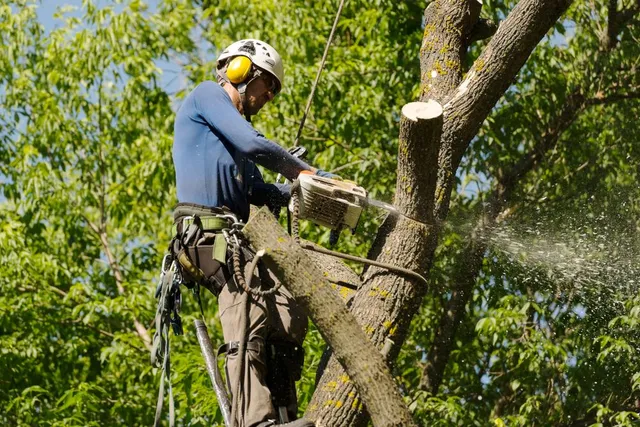
- Using specialized equipment, like chainsaws and cranes, with safety in mind.
- Disposing of debris and managing material removal as required.
Tree removal isn’t simple work. It necessitates precision and trust in licensed professionals to mitigate risks and ensure everyone’s safety.
Why Timely Response is Crucial for Tree Emergencies
Tree emergencies are all about timing; decisions need to be fast. Delays can escalate risks not just for the tree but also for people and property nearby. It’s necessary to lower liability and protect the surrounding landscape. Experts agree that quick reactions can limit potential damage. Properly monitored trees often avoid significant consequences, both financially and ethically.
Another critical point? The health of nearby plants frequently deteriorates after a tree falls. Root disruptions can affect soil quality and moisture levels for years to come. Swift professional help leads to effective long-term solutions.
Pruning and Maintenance: Enhancing Tree Health
The Science Behind Strategic Tree Pruning
Strategic tree pruning is more than a matter of looks; it’s crucial for tree vitality. When done right, proper techniques can greatly enhance growth. On the flip side, improper pruning can result in weak structures, increased disease susceptibility, and even untimely death of the tree. Grasping the principles behind the cuts is essential.
Professionals recognize the delicate balance between health and aesthetics, emphasizing techniques such as:
- Thinning: This technique improves light and air flow.
- Raising: Removing lower branches boosts visibility.
- Reducing: This method decreases the tree’s size and weight.
These practices focus on promoting vitality and extending the lifespan of trees, allowing them to thrive within their surroundings.
Best Practices for Year-Round Tree Care
Ensuring tree health is an ongoing duty. Many clients mistakenly believe tree care can be neglected during off-seasons, but that’s not the case. Regular inspections should be integral to maintenance strategies. Attention to detail is paramount.
Experts suggest these best practices:
- Plan seasonal inspections to catch issues early.
- Ensure proper watering, particularly in dry periods.
- Utilize effective mulching methods to maintain moisture and control weeds.
- Watch for pests and diseases regularly.
Engaging consistently in tree care transforms how trees develop, protects them from diseases, and enriches the overall landscape.
Identifying When Your Trees Need Professional Attention
Often, tree health goes unnoticed until it’s too late. Yet pinpointing when to reach out to professionals is vital. Regular inspection, even by experienced homeowners, can reveal hidden issues. What should trigger a call? Look out for dead branches, strange leaf markings, or fungal growths. Each of these could signal deeper concerns.
Ultimately, enlisting professional help can deliver key interventions that prevent catastrophic outcomes. It’s beneficial for homeowners and the greater ecosystem.
Arborist Reports: What They Are and Why They Matter
Decoding the Arborist Report Process
Comprehending the details of an arborist report can clarify numerous aspects of tree health and safety. A well-prepared report meticulously outlines the condition of trees on a property, addressing everything from risk assessments to growth suggestions. So, how does the process work?
Generally, it follows a structured approach. Experts initiate with an inspection, taking note of essential characteristics like tree species, health condition, and structural integrity. Then, they summarize findings in a coherent document that serves various purposes:
- Updating homeowners about the health of their trees.
- Aiding in real estate transactions where trees affect property value.
- Supporting municipal tree management strategies.
Clients often find these reports indispensable; they provide a clear pathway to sustained tree health.
How an Arborist Report Can Save You Money
The financial advantages of an arborist report are easy to overlook. In a fluctuating market, informed choices can yield considerable savings. A well-crafted report can identify issues before they transform into costly removals or emergency measures.
Consider this: proactive tree care not only extends tree life but also boosts property value. Homeowners can steer clear of fines when tree preservation is legally required. With knowledge comes power, and an arborist report acts as a safeguard.
Using Professional Insights for Long-Term Tree Care
Long-term tree care hinges on consistency, with professionals advocating for a strategy built on expert guidance. Following recommendations from an arborist report encourages sustainability. This may involve routine maintenance timetables, pest management strategies, and suitable planting approaches to avoid future issues. Ultimately, adhering to professional advice can significantly prolong a tree’s life.
It’s a continual commitment, indeed – but one that pays off in the health of the landscape overall.
Cost of Tree Services in Newcastle: What Locals Should Expect
Breaking Down the Costs of Common Tree Services
Understanding tree service pricing can be overwhelming, yet clarity is key. Newcastle tree services cover a range of options, each associated with various costs. Grasping these elements enables homeowners to make better-informed decisions.
Costs for diverse services generally include:
- Tree removal, influenced by size and complexity.
- Pruning and maintenance, which vary with frequency and scope.
- Emergency services, often priced higher due to urgency.
These factors contribute to customized quotes that reflect each unique situation.
Understanding How to Get the Best Value for Your Tree Care
Searching for value entails more than simply opting for the cheapest choice available. It’s about finding a balance between cost and quality. Clients often go astray by concentrating solely on price instead of the service’s inherent value. Here’s a crucial truth: lower-priced services can lead to pricier issues down the line.
Professionals recommend strategies for securing value:
- Explore local companies with credible reviews.
- Ask for comprehensive estimates detailing included services.
- Arrange routine maintenance to avert larger future issues.
Wise investments today can result in significant savings tomorrow – the specifics do matter.
What Factors Influence Pricing for Tree Removal and Maintenance
Pricing in the tree service sector is shaped by a variety of factors. Elements influencing costs can range from geographical considerations to the specific details of a service. Gaining insight into these variables can prepare clients for what they might encounter financially.
Consider these key aspects:
- The size and height of the tree heavily influence work complexity.
- Accessibility – the ease of using equipment near the tree.
- Tree condition, weighing job risks against corresponding costs.
Understanding these nuances empowers Newcastle residents to adequately prepare for tree services. Knowledge leads to confidence in decision-making.
FAQ
What qualifications should an arborist have?
Qualifications are a critical factor when seeking tree services. A certified arborist ought to have credentials from recognized organizations, ensuring they’ve completed extensive training. This expertise is vital for offering sound advice on tree health and safety.
How often should trees be inspected?
Regular inspections play an important role in maintaining tree health. Experts typically recommend at least once yearly for most trees, although specific species or environmental circumstances might require more frequent assessments. Addressing potential problems early can often prevent expensive remedies later on.
What should homeowners do after a tree is removed?
Actions taken post-removal are essential. After cutting down a tree, homeowners should evaluate the area for potential hazards like remaining stumps or root systems. It’s also wise to consider landscape modifications and possible replanting, which could enhance both aesthetics and environmental quality.
Can tree pruning be done in any season?
Timing is critical for tree pruning. While certain species may handle pruning at any time, most benefit from pruning during late winter or early spring, just before new growth begins. This strategy minimizes stress and fosters healthy regrowth.
What signs indicate a tree may need removal rather than pruning?
Not every tree can be saved, and there are specific signs that suggest removal is the better option. Severely damaged trunks, extensive decay, or a tree that leans at a concerning angle should trigger immediate professional scrutiny. Prioritizing safety often necessitates proactive removal measures.
How do weather conditions impact tree health?
Weather is a critical determinant of tree health. Extreme conditions – whether strong winds, heavy rains, or prolonged drought – can significantly stress trees. Being aware of these impacts enables homeowners to modify their maintenance strategies, thus ensuring better overall tree health.
What are the environmental benefits of maintaining healthy trees?
Healthy trees offer numerous environmental advantages. They enhance air quality, support local wildlife, and stabilize soil, among other benefits. Investing in tree maintenance not only safeguards home value but also positively affects the broader ecosystem.
Are there specific trees that require unique care or handling?
Certain tree species need specialized attention, often due to their growth patterns or disease vulnerabilities. Oaks, pines, and fruit trees, for instance, might necessitate tailored pruning and pest management methods. Understanding these requirements allows homeowners to provide suitable care and maximize tree lifespan.
Useful Resources
- International Society of Arboriculture
- Tree Care Industry Association
- eXtension: Urban Forestry
- United States Forest Service
- American Forests
- Planetree
- National Park Service
- TreeSource
